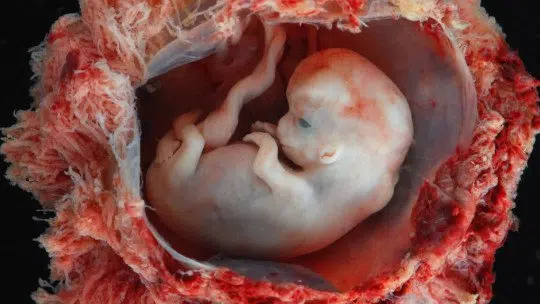
Potter syndrome or sequence is a rare condition that affects fetal kidney development during pregnancy. It can be caused by a variety of factors, such as urinary tract obstruction, lack of amniotic fluid, or genetic abnormalities. There are different types of Potter syndrome, each with its own characteristics and severity. Symptoms can include low amniotic fluid, facial deformities, lung and kidney problems, among others. Early diagnosis and medical follow-up are essential for the treatment and management of this condition.
Main causes of Potter Syndrome: genetic factors, kidney malformations and oligohydramnios.
Potter syndrome, also known as Potter sequence, is a rare condition that affects the development of an unborn fetus' kidneys. This syndrome can be caused by several factors, such as genetics, kidney malformations, and oligohydramnios.
Genetic factors play a significant role in Potter syndrome, possibly linked to genetic mutations that affect fetal kidney development. These mutations can interfere with the formation of nephrons, the functional units of the kidneys, leading to kidney malformations.
Kidney malformations are also a major cause of Potter syndrome, as they prevent the kidneys from functioning properly and producing urine. These malformations can be congenital or acquired during fetal development and can vary in severity.
Oligohydramnios, which is a decrease in the volume of amniotic fluid surrounding the fetus, can also contribute to the development of Potter syndrome. Amniotic fluid is essential for the proper development of the fetus's lungs, kidneys, and other organs, and its decrease can lead to serious complications.
It is important for healthcare professionals to be aware of the symptoms of this condition and make an early diagnosis to ensure the best possible treatment.
Understand the meaning of the Potter sequel, a series of famous books and films.
The Potter sequel refers to the famous book and film series created by author J.K. Rowling, which tells the story of the young wizard Harry Potter and his adventures at Hogwarts School of Magic. This series has become a cultural phenomenon, garnering millions of fans around the world.
Potter syndrome or sequence, on the other hand, is a rare condition that affects fetal development. It is caused by a decrease in amniotic fluid during pregnancy, resulting in physical deformities in the baby. There are different types of Potter sequence, the most common being classic Potter sequence and fetal Potter sequence.
Symptoms of Potter sequence include typical facial features, such as wide-set eyes and low-set ears, as well as limb and lung deformities. The causes of this condition are primarily related to kidney problems in the fetus, which lead to a decrease in amniotic fluid.
It is important to be aware of the symptoms and causes of this syndrome for proper diagnosis and treatment.
Possible causes of renal agenesis: what can lead to this condition?
Renal agenesis is a rare condition in which a person is born with only one functioning kidney or no kidneys at all. This condition can be caused by various factors, including genetic abnormalities, problems during embryonic development, and environmental factors.
One of the main causes of renal agenesis is Potter syndrome , also known as Potter sequence. This syndrome is a set of congenital anomalies that affect the development of the kidneys and urinary tract. It can be caused by genetic mutations, viral infections during pregnancy, and exposure to certain toxic substances.
In addition to Potter syndrome, other genetic conditions, such as renal dysplasia and segmental agenesis , can also lead to renal agenesis. These conditions affect kidney development during gestation and can result in the complete or partial absence of a kidney.
It is important to emphasize that renal agenesis can be diagnosed during pregnancy through ultrasound examinations. If the condition is not identified before birth, symptoms may include high blood pressure , swelling in the legs, and difficulty urinating.
Early identification of the condition is essential for proper treatment and to prevent future complications.
What are the causes of a kidney cyst in a fetus?
Renal cysts in a fetus can have several causes, one of which is Potter syndrome or sequence. This syndrome is a rare condition that affects kidney development and can lead to the formation of renal cysts in the fetus.
The causes of Potter syndrome may be related to genetic problems, such as mutations in genes responsible for kidney development. Furthermore, environmental factors, such as exposure to toxic substances during pregnancy, can also contribute to the development of the syndrome.
Renal cysts in a fetus can be identified through ultrasound scans during pregnancy. They can cause symptoms such as abdominal pain, high blood pressure, and urinary tract infections. Treatment for renal cysts in a fetus can vary depending on the severity of the condition and may include regular medical monitoring and, in more severe cases, surgical intervention.
It's important for parents to be aware of the possible causes of renal cysts in a fetus so they can seek appropriate treatment and ensure the baby's well-being. Potter syndrome is a serious condition that requires specialized medical monitoring and specific care, so it's crucial to be aware of the symptoms and seek professional help when necessary.
Potter syndrome or sequence: types, symptoms and causes
Different factors, including kidney malformations, can interfere with intrauterine development and cause changes in other body systems.
In this article, we will discuss the causes, symptoms, and types of Potter syndrome , the name by which this phenomenon is known, generally of genetic origin.
What is the Potter sequel?
The terms "Potter sequence" and "Potter syndrome" are used to refer to a set of physical malformations that occur in babies as a result of kidney abnormalities, lack of amniotic fluid (oligohydramnios), or compression during intrauterine development.
In 1946, physician Edith Potter described twenty cases of people without kidneys who also presented peculiar physical characteristics in their head and lungs . Potter's contributions were fundamental in raising awareness about this disease, which was more common than previously thought.
Potter believed that this type of physical malformation was always due to the absence of kidneys, or renal agenesis; however, it was later discovered that there were other possible causes. Around these and associated alterations, the typological classification we use today was developed.
- You may be interested in: "How to take care of yourself during the first month of pregnancy: 9 tips"
Causes of this change
Potter syndrome is frequently associated with diseases and problems of the urinary system, such as agenesis of the kidneys and ureter, polycystic kidney disease, and multicystic kidney disease or urinary tract obstruction, which may be due to genetic and environmental causes.
Many cases of Potter syndrome have a genetic origin (although they are not always inherited); mutations in chromosomes 1, 2, 5, and 21 have been identified in variants of bilateral renal agenesis, and similar causes have also been identified in all other types.
The development of the classic variant consists of a series of interrelated events; this is why it is also called the "Potter sequence." Incomplete formation of the kidneys and/or ureter or rupture of the amniotic sac causes the fetus to lack sufficient amniotic fluid to develop properly.
- You may be interested in: “The 13 types of abortion and their psychological and physical effects”
Symptoms and main signs
Sometimes, the signs that characterize Potter syndrome can already be observed during intrauterine development. Most commonly, medical examinations reveal the presence of cysts in the kidneys, oligohydramnios , or absence of amniotic fluid , which usually occurs due to rupture of the sac containing it.
After birth, the facial features described by Potter become apparent: a flat nose, epicanthal folds around the eyes, a receding chin, and abnormally low-set ears. Additionally, changes in the upper and lower extremities may occur. However, these features are not always present to the same degree.
Potter syndrome is also associated with malformations of the eyes, lungs, cardiovascular system , intestines, and bones, primarily the vertebrae. The urogenital system is usually very significantly altered.
Types of Potter syndrome
Currently, the different forms of Potter syndrome are classified into five broad categories or types. They differ in both causes and core clinical manifestations. It's also important to mention the classic form of this disease and the one associated with multicystic renal dysplasia, discovered very recently.
1. Type I
This variant of Potter syndrome occurs as a result of autosomal recessive polycystic kidney disease , a hereditary disease that affects the kidneys and is characterized by the appearance of numerous small, fluid-filled cysts. This causes enlargement of the kidneys and interferes with urine production.
2. Type II
The main characteristic of type II is renal agenesis or aplasia, that is, the congenital absence of one or both kidneys ; in the second case, we speak of bilateral renal agenesis. Since other parts of the urinary system, such as the ureter, are also often affected, these signs are usually called "urogenital agenesis." The origin is generally hereditary.
3. Type III
In this case, the malformations are due to autosomal dominant polycystic kidney disease (unlike type I, in which the disease is transmitted by recessive inheritance). Cysts are observed in the kidneys and an increase in size, in addition to an increased frequency of vascular diseases. Symptoms usually manifest in adulthood.
4. Type IV
Potter syndrome type IV is diagnosed when cysts appear and/or fluid (hydronephrosis) accumulates in the kidneys due to chronic obstruction of this organ or ureter. It is a common variant during the fetal period that usually does not cause spontaneous abortion. The cause of these changes can be genetic and environmental.
5. Classic form
When discussing classic Potter syndrome, we are referring to cases in which neither the kidneys nor the ureter develop (bilateral renal agenesis). It has been proposed that the classic form described by Potter in 1946 could be considered an extreme version of type II, also characterized by renal agenesis.
6. Multicystic renal dysplasia
Multicystic renal dysplasia is a condition characterized by the presence of numerous irregular cysts in the kidneys ; compared to the term "polycystic," "multicystic" indicates a lower severity. In recent years, cases of Potter syndrome due to this disorder have been identified, which could indicate a possible new type.
Contents
- 1 Main causes of Potter Syndrome: genetic factors, kidney malformations and oligohydramnios.
- 2 Understand the meaning of the Potter sequel, a series of famous books and films.
- 3 Possible causes of renal agenesis: what can lead to this condition?
- 4 What are the causes of a kidney cyst in a fetus?
- 5 Potter syndrome or sequence: types, symptoms and causes
- 6 What is the Potter sequel?
- 7 Causes of this change
- 8 Symptoms and main signs
- 9 Types of Potter syndrome