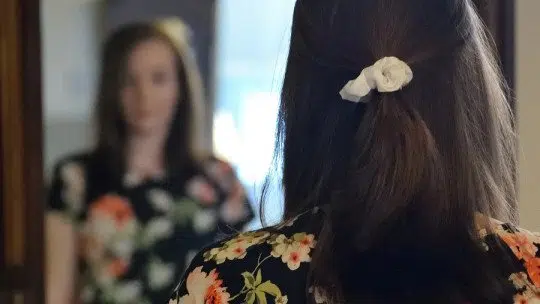
Eisoptrophobia, also known as the fear of self-reflection, is a psychological disorder characterized by an intense fear of looking at oneself, whether physically in a mirror or emotionally when reflecting on one's own emotions and thoughts. This fear can be triggered by a variety of factors, such as low self-esteem, emotional trauma, or negative past experiences. Symptoms of eisoptrophobia include anxiety, avoidance of situations that involve looking at oneself, feelings of inadequacy, and discomfort when confronted with one's own image or thoughts. To deal with this fear, it is important to seek professional help, such as cognitive behavioral therapy, to identify the underlying causes of the fear and learn strategies to cope in a healthy and constructive way. It is essential not to isolate oneself and to seek support from friends and family during the process of overcoming eisoptrophobia.
Understand the meaning and symptoms of eisoptrophobia, the fear of mirrors.
Eisoptrophobia, also known as catoptrophobia, is an irrational and persistent fear of mirrors. For those suffering from this disorder, the mere thought of looking in a mirror can trigger intense feelings of anxiety and fear.
Symptoms of eisoptrophobia can vary from person to person, but generally include anxiety , panic , sweating, tachycardia, tremors, and even panic attacks . Additionally, the person may completely avoid mirrors and reflective surfaces, which can significantly impact their quality of life.
To deal with eisoptrophobia, it's important to seek help from a mental health professional, such as a psychologist or psychiatrist. Cognitive behavioral therapy can be effective in treating this fear, helping the person identify and modify distorted thoughts about mirrors.
Additionally, relaxation practices such as meditation and deep breathing can help manage anxiety when confronted with a mirror. It's important to remember that eisoptrophobia is a treatable disorder, and professional support can make all the difference in the recovery process.
What are the signs that someone is feeling fear?
When someone is feeling fear, the body tends to react in a variety of ways, manifesting physical and emotional symptoms. Some of the most common signs include an accelerated heart rate, excessive sweating, trembling, rapid and shallow breathing, muscle tension, dry mouth, and dilated pupils. Additionally, the person may experience emotional symptoms such as anxiety, nervousness, insecurity, and difficulty concentrating.
For those suffering from Eisoptrophobia, the fear of self-reflection, these symptoms can be even more intense. The idea of looking at oneself and confronting one's thoughts and emotions can trigger strong feelings of anxiety and discomfort. The person may avoid situations that require self-reflection, which can negatively affect their personal and professional lives.
It's important to be aware of signs of fear and seek professional help if these symptoms are interfering with your quality of life. Cognitive behavioral therapy, for example, can be an effective approach in treating Eisoptrophobia, helping people cope with their fears and develop strategies to cope with them in a healthy way.
Treatment for Nyctophobia: Strategies and Tips to Overcome the Fear of the Dark.
Nyctophobia, or fear of the dark, is a common problem that affects many people. This fear can cause anxiety and difficulty sleeping, impacting the individual's quality of life. Fortunately, there are several strategies and tips that can help overcome this fear.
One way to deal with nyctophobia is to gradually expose yourself to the dark and learn to feel comfortable in that situation. Cognitive-behavioral therapy can be an effective option to help modify negative thoughts about the dark and develop skills to cope with the fear.
In addition, it's important to create an environment conducive to sleep, with a relaxing bedtime routine and a comfortable, dark bedroom. Using a nightlight can help you feel safer at night.
Practicing relaxation techniques, such as deep breathing and meditation, can also be helpful in reducing anxiety and improving sleep quality. It's important to seek help from a mental health professional if fear of the dark is significantly disrupting daily life.
With the right support and effective strategies, it is possible to overcome nyctophobia and enjoy peaceful, restful nights.
Eisoptrophobia, fear of self-reflection: symptoms and what to do.
How does fear affect people's mental and emotional functioning?
Fear is a powerful emotion that can have a significant impact on people's mental and emotional functioning. When a person experiences fear, the body goes into a state of high alert, releasing stress hormones like cortisol and adrenaline. This can lead to a range of physical symptoms, such as a racing heartbeat, sweating, and shallow breathing.
Mentally, fear can lead to negative and obsessive thoughts, difficulty concentrating, and insomnia. Furthermore, fear can trigger anxiety and even panic attacks in some people. These symptoms can have a significant impact on an individual's quality of life and emotional well-being.
A specific example of a fear that can affect mental and emotional functioning is eisoptrophobia , which is the fear of self-reflection. People who suffer from eisoptrophobia may avoid looking inward and confronting their own thoughts and emotions. This can lead to a cycle of avoidance and denial, resulting in a distancing from oneself and others.
To deal with eisoptrophobia and other fears, it's important to seek help from a mental health professional. Cognitive behavioral therapy, meditation, and relaxation techniques can be helpful in confronting fear and learning to manage thoughts and emotions in a healthy way. Recognizing and facing fear, rather than avoiding it, is essential to promoting mental and emotional health.
Eisoptrophobia, fear of self-reflection: symptoms and what to do
Eisoptrophobia is an irrational fear of seeing one's own image reflected in a mirror . More specifically, the sufferer experiences intense fear at the idea of seeing something terrifying in the mirror, such as ghosts, spirits, etc.
Although the person is able to see the irrationality and absurdity within their fear, they cannot help but feel it, just as with most phobias. This aspect is related to a superstitious belief , in which it is thought that seeing one's own image reflected in a mirror can lead to something bad happening, and the same is true if the mirror is broken. Taking the cultural aspect into consideration here is important.
Eisoptrophobia is also associated, within anxiety disorders, with the rejection of one's own image . When we don't have an adequate view of ourselves, but on the contrary, when we see ourselves reflected in a mirror, we are faced with everything that produces rejection of our own body, becoming something obsessive and that tends to be avoided. And, on the other hand, it can be part of a more serious mental disorder.
What is eisoptrophobia? Characteristics
Those who suffer from eisoptrophobia experience the same symptoms as any phobia when confronted with the feared stimulus —in this case, mirrors—or when they anticipate being confronted with it. Some of the most common symptoms are:
- Sweating
- Feeling of suffocation and shortness of breath.
- Tachycardia
- Want to run away and avoid mirrors.
- Dizziness and nausea
- Intense fear and anxiety.
Who suffers?
After numerous scientifically supported investigations, we can say that phobias are learned and some people are more vulnerable than others to developing them.
This vulnerability can occur in various aspects, one of which, as I indicated above, has to do with self-image and self-concept . That is, those people who have low self-esteem and focus especially on their appearance are afraid to look in the mirror because what they see produces very intense feelings of rejection. Avoiding exposure to it will make the anxiety greater and more uncontrollable.
On the other hand, all this superstitious thinking linked to the "bad luck" that comes from a mirror breaking, or breaking accidentally, as well as ideas such as the possibility that the person might see something frightening reflected in the mirror, or even that something comes out of the mirror and could harm them, can lead to irrational beliefs that cause and maintain the problem.
How does this harm mental health?
The consequences of any type of phobia are the limitations that the person suffers. They will try to avoid anything that involves what is feared; in this case, anything to do with mirrors or reflective surfaces.
Those who suffer from this phobia at home don't have mirrors where they can be seen and avoid situations where mirrors are present, for example, social situations in restaurants, hairdressers or beauty salons, shops, etc. And those who cannot avoid it will live with great discomfort and anxiety.
These limitations cause the person to reduce their circle of social activities, which can even affect work, family and relationships.
Treatment
Treatment for eisoptrophobia aims to eliminate the fear, unlearn what has been learned, and discover other ways to cope with the problem.
The most effective therapeutic approach today is exposure therapy . It consists of gradually exposing the person to the feared stimuli, so that they gradually become desensitized and equipped with anxiety management strategies, as well as restructuring unfair and irrational thinking.
Thus, self-esteem and self-confidence are recovered ; in short, you can control what happens by eliminating the limits that the disorder itself causes the person to impose.
References:
- André, Christophe. (2006). Psychology of fear. Fears, anxieties and phobias. Barcelona Editorial Kairós, 2006.
- Cavallo, Vicente. (1998). International Manual of Cognitive and Behavioral Treatments for Psychological Disorders. Pergamon pp. 5-6.
- Evans, Rand. (1999). Clinical psychology born and bred in controversy. APA Monitor, 30 (11).