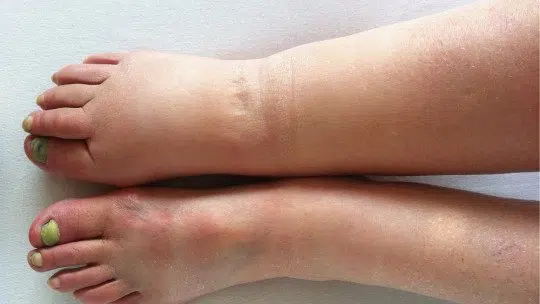
Elephantiasis is a chronic and debilitating disease that causes extreme swelling in the legs, arms, genitals, and other parts of the body. The main symptoms include increased volume in the affected area, thick, orange-peel skin, pain, fever, and recurring infections. The most common cause of elephantiasis is infection with parasites transmitted by mosquito bites, such as filariasis. Treatment for elephantiasis involves therapies to control swelling, prevent infections, and improve the patient's quality of life, such as physical therapy, medication, and surgery. It is important to seek medical help as soon as the first symptoms appear to avoid complications and treat the disease appropriately.
What triggers elephantiasis and how can this serious disease be prevented?
Elephantiasis, also known as lymphatic filariasis, is a disease caused by parasites transmitted by mosquito bites. Filarial worms obstruct the lymphatic system, leading to disproportionate swelling of the limbs and other serious complications.
The main symptoms of elephantiasis include swelling of the limbs, thick and rough skin, fever, joint pain, and fatigue. The disease can lead to physical disability and psychological problems due to the stigma associated with excessive swelling.
The main cause of elephantiasis is infection with filarial worms, which are transmitted through the bite of infected mosquitoes. Disease prevention involves simple measures such as using insect repellents, mosquito nets, and long-sleeved clothing to avoid mosquito bites. Additionally, preventive medication may be recommended in endemic areas.
Treatment for elephantiasis typically involves medication to kill the worms and relieve symptoms such as swelling and pain. In advanced cases, lymphatic drainage and physical therapy may be necessary to improve circulation and reduce swelling.
Disease prevention includes simple measures such as the use of insect repellents and protective clothing, as well as preventive medication. Treatment for elephantiasis aims to alleviate symptoms and improve the quality of life of affected patients.
Effective treatments to combat elephantiasis and alleviate the symptoms of the disease.
Elephantiasis, also known as lymphatic filariasis, is a tropical disease caused by mosquito-borne parasites. The main symptoms include abnormal swelling in parts of the body, such as the legs, arms, genitals, and breasts. Pain, fever, and skin inflammation may also occur.
There are several effective treatments to combat elephantiasis and alleviate its symptoms. The most common treatment involves administering antiparasitic medications, such as diethylcarbamazine, which helps kill parasites in the body. Additionally, it's important to maintain good hygiene and skin care to prevent secondary infections.
Another treatment option is compression therapy, which involves wearing compression stockings or bandages to help reduce swelling and improve blood circulation. Physical therapy may also be recommended to strengthen muscles and improve mobility in affected joints.
In more severe cases, surgery may be necessary to remove damaged tissue and improve lymphatic drainage. This procedure can help reduce swelling and improve the patient's quality of life.
It's essential to follow your doctor's instructions and maintain regular follow-up care to ensure the treatment's effectiveness. With proper care, elephantiasis can be controlled and symptoms minimized, allowing patients to live a more comfortable and healthy life.
How to prevent elephantiasis and protect yourself from this debilitating and disfiguring disease.
Elephantiasis, also known as lymphatic filariasis, is a parasitic disease that affects the lymphatic system and causes swelling and deformities in the legs, arms, and genitals. Symptoms include fever, pain, and tenderness in the affected area, as well as thick, wrinkled skin. The disease is caused by parasitic worms transmitted by mosquito bites.
To prevent elephantiasis, it's important to take protective measures against mosquito bites. Using repellents, covering most of the body, and installing window screens can help prevent exposure to the insects that transmit the disease. It's also crucial to avoid stagnant water, which serves as a breeding ground for mosquitoes.
Treatment for elephantiasis includes medications to kill parasitic worms, as well as compression therapy and skin care to reduce swelling and prevent infection. In advanced cases, surgery may be necessary to correct deformities and improve the patient's quality of life.
By following these guidelines, you can avoid this debilitating and disfiguring disease.
How is filariasis, a disease transmitted by mosquitoes, treated?
Elephantiasis, also known as lymphatic filariasis, is a disease caused by parasites transmitted by mosquito bites. Symptoms include abnormal swelling in the lower limbs, genitals, or other parts of the body, as well as fever, pain, and fatigue.
Treatment for filariasis typically involves antiparasitic medications, such as diethylcarbamazine, which help kill parasite larvae in the bloodstream. Additionally, anti-inflammatory medications may be necessary to reduce swelling and pain.
In more severe cases, surgery may be necessary to remove affected tissue and improve blood circulation. Complementary therapies, such as lymphatic drainage and physical therapy, may also be recommended to help manage symptoms and improve the patient's quality of life.
It's important to remember that prevention is key in combating elephantiasis. Simple measures, such as using repellents, wearing clothing that covers most of the body, and eliminating mosquito breeding sites, can help reduce the risk of contracting the disease.
Elephantiasis: Symptoms, Causes, and Treatments
There are many diseases and disorders in the world, many of which are largely unknown to most of the world or tend to be strange given the low prevalence in our countries of origin.
However, some of them cause obvious physiological changes visible to the naked eye, which makes some existing cases stand out and be recognized or remembered. This is the case with elephantiasis , also known as lymphatic filariasis (although elephantiasis refers more to the symptom in question, they are often identified as synonyms).
- You may be interested in: “The differences between syndrome, disorder and disease”
What is elephantiasis?
Elephantiasis refers to the presence of marked and evident swelling and thickening of tissues resulting from a blockage of the lymphatic system , which interrupts lymphatic drainage. It is the third stage of lymphedema, in which the changes become permanent. It usually appears in the chronic phase of lymphatic filariasis, to the point that it is frequently identified, and lymphatic filariasis and elephantiasis are used synonymously. Thickening usually occurs in the legs or arms, and genital and breast involvement is also frequent. It can often cause pain in those who suffer from it. The renal and immune systems are also frequently damaged, as are the bones.
The deformities caused by this disorder can have serious consequences for those who suffer from it, and the appearance of fistulas, wounds with the possibility of infection, or even tumors is not uncommon. On a functional level, it can also profoundly alter a person's life, potentially affecting or even preventing the ability to walk or move, and is a frequent cause of physical disability. If it occurs in the genitals, it also affects sexual function.
The parasitic infection that causes it usually occurs in childhood, although in most cases symptoms begin to appear in adulthood. This infection can, in fact, remain asymptomatic, despite damage to the lymphatic system.
Likewise, these changes often cause great shame and discomfort to those affected, many of whom avoid social contact and isolate themselves. In fact, even the term elephantiasis (which compares the legs of those affected to those of an elephant) can be a source of stigma for them. Social and professional life are profoundly affected as an indirect effect, and the onset of malaise, depression, and anxiety is not uncommon.
It is a tropical disease found mainly in countries in Africa, South America, Central America, or Indonesia . Although it may seem like a strange disease and it's easy to think of it as classifiable among rare and uncommon diseases, the truth is that it is more common than it appears: about 120 million people suffer from some form of this disorder. However, it is a disease that is not widely considered at a general level, and research into its treatment has been neglected for years.
- You may be interested in: ” The 15 most common diseases of the nervous system “
Appearance stages
Three phases can be identified in which elephantiasis gradually develops. Technically, the name elephantiasis would correspond to the third or final phase of the process, progressing with lymphedema (swelling generated by lymph) until reaching a chronic phase.
1. Post-sting edema
The first thing to consider is the appearance of the mosquito bite that transmits filariasis. Initially, no symptoms of any kind may appear. In cases where symptoms do occur, a palpable swelling is usually observed in the affected area, which gradually increases. In the morning, the swelling is imperceptible, but it reappears throughout the day . The skin is still soft.
2. Second phase: progression of lymphedema
In a second phase, the swelling increases and is noticeable at all times, although it seems to be reduced even in the morning (something that will eventually stop happening). The skin gradually hardens.
3. Elephantiasis
Third and final stage, in which the swelling problem becomes irreversible and acquires a characteristic hardness. The level of swelling may increase and the morphological changes will be permanent.
Causes of this disease
Elephantiasis is a problem that can have different causes, although the most common is infection by parasitic worms known as filariae . This parasite blocks the lymphatic system, causing edema or fluid accumulation in different areas of the body. Specifically, the most common is Wuchereria bancrofti , although other species also cause this disease. The parasite usually comes into contact with our body through the bite of mosquitoes such as Anopheles and Culexes, passing the infection from the blood to the lymphatic system (where the parasites feed and grow).
However, although elephantiasis is usually caused by this reason, sometimes alterations can also occur that end up generating elephantiasis (if we understand it as a symptom and not as a disorder in itself). We would then speak of non-filarial elephantiasis , caused by other lesions, such as some metastases from certain tumors, other diseases, or the consequences of surgery that would damage the lymphatic system.
Treatments
Fortunately, the disease that causes elephantiasis can be treated with various drugs and antiparasitics , especially in the acute and initial stages. Among the most commonly used and effective are ivermectin and diethylcarbamazine. Antibiotics and analgesics may also be necessary to combat infections and pain, which are common in this disease.
It should be kept in mind that, although the parasites are killed, the malformations present in the chronic phase (i.e., extreme swelling of the affected areas) may remain for life. There are procedures such as compression therapies and surgery that can reverse the swelling, although the use of compression mechanisms is necessary. Drainage or diversion of excess lymph may also be helpful . In these cases, compressive measures, establishing hygiene guidelines to prevent infections, and physiotherapy may be useful.
Although treatable, it is necessary to consider the need to establish prevention plans. Hygiene and mosquito control through mosquito nets or insecticides can help avoid this disease, which has traditionally been poorly addressed worldwide (although the WHO has launched a global program for the elimination of lymphatic filariasis that is expected to achieve approximately 2020).
References:
- Lozano, Y. (2009). Elephantiasis At the rate of one case. Electronic medical journal, 31 (3). Matanzas, Cuba.
- Fenwick, A. (2012). The global burden of neglected tropical diseases. Public Health, 126 (3): 233–236.
- Fortunately, EI; Guerreiro, MF; Pereira, JM (2014). Is lymphedema reversible? Chilean Rev. Dermatol.; 30 (4)
Contents
- 1 What triggers elephantiasis and how can this serious disease be prevented?
- 2 Effective treatments to combat elephantiasis and alleviate the symptoms of the disease.
- 3 How to prevent elephantiasis and protect yourself from this debilitating and disfiguring disease.
- 4 How is filariasis, a disease transmitted by mosquitoes, treated?
- 5 Elephantiasis: Symptoms, Causes, and Treatments
- 6 What is elephantiasis?
- 7 Appearance stages
- 8 Causes of this disease
- 9 Treatments