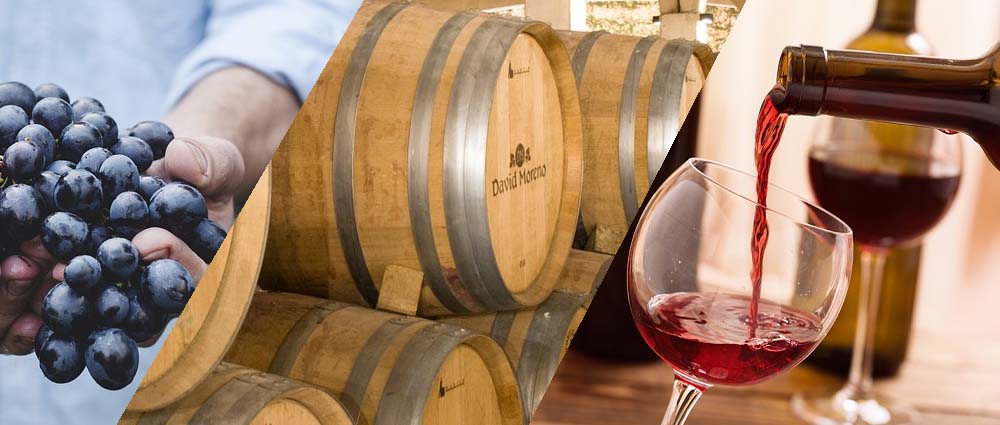
The production circuit is the process by which raw materials are transformed into final products through a series of interconnected steps. These steps range from the extraction or cultivation of the raw material to the production, distribution, marketing, and consumption of the product. Each stage of the production circuit involves different economic agents and technologies and is fundamental to the economy of a country or region, as it generates jobs, income, and wealth. The production circuit is essential to the functioning of modern society, ensuring the supply of goods and services necessary to meet the population's demands.
Understand the definition and operation of a production circuit in modern industry.
The production cycle is the process by which resources are transformed into products or services. In modern industry, this cycle involves several stages, from the extraction of raw materials to the distribution of the final product.
To initiate the production cycle, it's necessary to obtain the necessary inputs. This may involve purchasing raw materials, hiring labor, and acquiring equipment. These inputs are then transformed using technology and industrial processes.
After production, products are stored and distributed to consumers. At this point, it's crucial to ensure logistical efficiency so that products reach their final destination on time.
It's important to emphasize that each stage of the production cycle is interconnected and dependent on the others. Any failure at one stage can impact the entire process, affecting the quality of the final product and customer satisfaction.
Therefore, to ensure the success of the production circuit, companies must invest in technology, team training, and quality control. Furthermore, it's essential to be aware of market demands and constantly seek improvements in production processes.
Understand how the productive space circuit works in today's economy.
The production cycle is a sequence of steps involved in the production of a good or service, from raw materials to the final product reaching the consumer. This process is fundamental to understanding how the economy works and how resources are used efficiently.
In the spatial production circuit, companies interconnect across different sectors of the economy, creating a complex production network. Each company is responsible for a specific stage of the process, such as raw material extraction, product manufacturing, and market distribution.
For the production chain to function efficiently, there must be coordination between companies, ensuring that the necessary inputs are available at the right time and in the right place. Furthermore, it's crucial that there be a consumer market that demands the final products.
Understanding how the spatial production circuit works is essential for analyzing the dynamics of the current economy and identifying potential bottlenecks or opportunities for improvement. Therefore, it's crucial that managers and business owners pay close attention to all stages of the process and seek ways to optimize product production and distribution.
What is the production circuit?
A production circuit is the network of individuals, organizations, resources, activities, and technology involved in the creation and sale of a product, from the delivery of raw materials—that is, from the supplier to the manufacturer—to delivery to the end user.
The segment of the production circuit involved in obtaining the final product is known as the distribution channel.
Basically, the entire production circuit begins with the extraction of resources to obtain raw materials; the products are then transported to factories (in the case of secondary goods) or consumption centers (in the case of primary goods).
Secondary goods are transported to locations where they are distributed and sold. The production cycle ends when the product is consumed.
What is the production circuit?
What the production circuit does is add value to goods. From the moment the raw material is extracted and a product is produced, value is added at each stage of the production circuit.
For example, in winemaking, grapes picked from a vineyard don't have the same value as wine that's already bottled and ready to drink. This is due to the stages the raw material has gone through.
Knowing what a production circuit is and how it works allows you to understand the different stages of production and understand who is involved in the circuit and how they influence it.
This, in turn, allows us to analyze the problems that may arise among those involved in each sector and how the lives of workers and the economy of a country may be changed.
Supply chain management is the oversight of materials, information, and finances as they move through the process from supplier to manufacturer, from wholesaler to retailer and consumer.
The three main flows in the supply chain are product flow, information flow, and financial flow.
What is the difference between logistics, supply chain, and supply chain management?
Logistics typically refers to activities that occur within the boundaries of a single organization. On the other hand, a supply chain refers to networks of companies that work together and coordinate their actions to deliver a product to market.
Traditional logistics also focuses on these activities. Supply chain management recognizes traditional logistics and also includes activities such as marketing, new product development, finance, and customer service.
Going into a slightly deeper definition, it can be said that logistics is the method of getting the right product to the right customer in the right quantities and conditions, to the right place, at the right time and at the right cost.
What is supply chain management?
As already mentioned, the supply chain refers to a “network” in which the different processes and activities that produce value in the form of products and services that reach the hands of the end consumer are involved, through links up and down.
Supply chain management is the coordination of production, inventory, location, and transportation among participants in a production chain to achieve the best combination of responsiveness and efficiency for the market.
It can be said that supply chain management has some important components such as the following:
- It's a network
Many companies have a department that controls various activities in the supply chain, which is actually a “network” made up of many participants.
A generic supply chain structure is as simple as: supplier, manufacturer, wholesaler, and retailer.
The word "management" can be briefly explained as "planning, execution, control." Supply chain management is the planning, implementation, and control of these networks.
- Information must flow
Another important attribute of supply chain management is the flow of materials, information, and finances (money). There are three types of flow, but the most important is information flow, or the exchange of information.
When demand data is not shared, everyone involved in the supply chain must make some kind of speculation.
For example, if a retailer has a demand for 100 units, but each retailer tends to hold inventory every step of the way, this results in a higher cost for everyone involved in the same supply chain.
When information is shared from the retailer to the supplier, there's no need to maintain inventory. The result is lower costs for everyone involved.
- Avoid conflicting goals
Working in a supply chain network requires the same objective, but sometimes they don't. "Conflicting objectives" is the term used to describe the situation where objectives don't align well.
For example, people who buy always order from cheaper sellers (with very long delivery times), but people who produce need material more quickly.
To avoid conflicting objectives, a time-based strategy, a low-cost strategy, or a differentiation strategy should be adopted. Clear direction is necessary for people to make decisions.
Production circuits in the agricultural industry

As the name suggests, agribusiness is a system that combines agricultural and industrial processes. The goal is to produce products from the field, which undergo different stages, namely:
-The agricultural phase
-Transportation of raw materials
-Marketing
In some countries, the agro-industrial production circuit varies by region. In Argentina, for example, the Cuyana region specializes in wine, although sometimes only the agricultural phase is developed there, followed by the industrial phase in another region. This largely depends on the cost of a given product.
References
- Julio Steimberg Some productive circuits in Argentina. (2012). primaryfavaloro.com.ar.
- Supply chain (n.d.). businessdictionary.com.
- Leif Enarsson What do we really mean by supply chain management? (2009). supplychainquarterly.com.
- Supply chain (n.d.). investopedia.com.

Contents
- 1 Understand the definition and operation of a production circuit in modern industry.
- 2 Understand how the productive space circuit works in today's economy.
- 3 What is the production circuit?
- 4 What is the production circuit?
- 5 What is the difference between logistics, supply chain, and supply chain management?
- 6 Production circuits in the agricultural industry